
Educating
Our Knowledge Hub
Sharing the knowledge to build better places
The Knowledge Hub is the second pillar of our Place Building System and is available exclusively to members as part of their membership. Our 14 Domains (modules) will be released regularly over the next 12 months, starting June 2026.
Developed in partnership with the University of the Built Environment and The King’s Foundation, this first-of-its-kind educational resource supports learners to overcome key challenges, strengthen business performance, improve margins, and compete more effectively, while embedding Place Building principles throughout the entire development lifecycle.
What the Knowledge Hub includes:
- 14 self-paced domains (modules)
- Full lifecycle coverage: strategy, decision-making, planning, design, delivery, and stewardship
- Practical, real-world tools supported by essential theory
- Expert best practice interviews and downloadable resources
- Certificates awarded on completion of each domain
How this will impact your business:
- Strengthen the quality, distinctiveness, and long-term value of your developments
- Reduce risk and avoid costly mistakes
- Improve margins, increase efficiency and secure higher-value opportunities
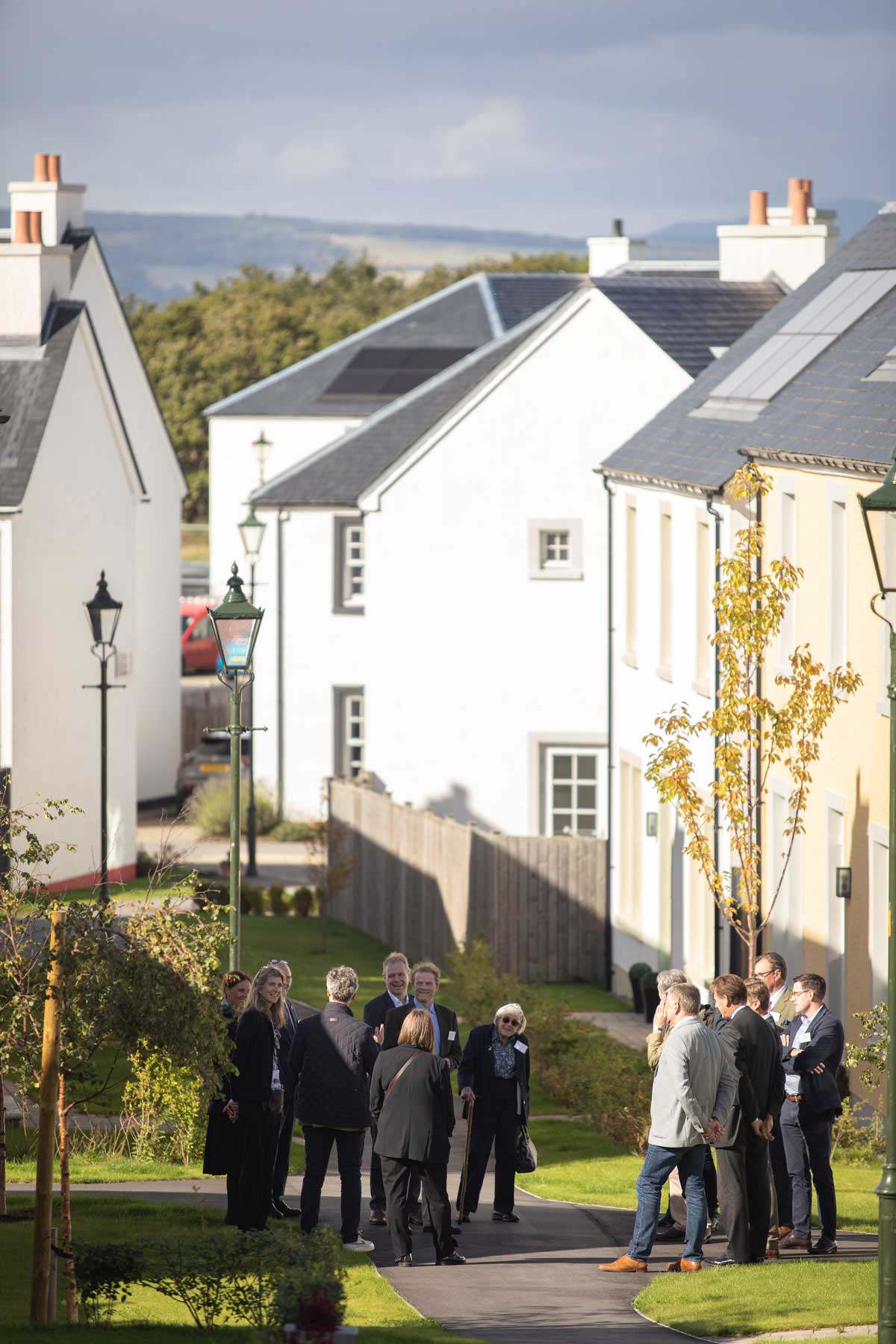
Our learning Programme Structure (the Domains)
Our learning programme supports developers in moving beyond units and layouts, toward creating enduring places that work for residents, communities and businesses alike. Our structure will break down as follows:
0.1 The Place Building System
An introduction to placemaking and place building principles, why they matter, and how regional developers are particularly well-placed to utilise their benefits.
Phase 1: Project Inception
Phase 1 Project Inception recognises that businesses and practitioners are familiar with and undertake this stage as part of their regular development appraisal process and opportunity go/no-go consideration.
Place building development undertakes the same established processes as traditional development, however, applying a ‘place building’ lens requires traditional approaches to be reassessed.
1.1 Strategic Context
Sets the foundation for informed decision making at the outset of a project.
This domain explores:
- how to assess whether a scheme is worth pursuing
- considerations within initial appraisal process
- the wider market and policy context
- key site constraints and opportunities
- initial assessments regarding infrastructure, viability and landownership in shaping deliverable outcomes.
1.2 Development Strategy and Business Model
Focuses on aligning place building ambitions with commercial reality.
This domain explores:
- development viability, cost-value assessments and cash flow management to assess whether a scheme is financially viable for the target area.
- stewardship models, including legal structures, tax planning and funding strategies
- options such as outright sale, promotion agreements, joint ventures and consortium approaches.
- how choices around development quality, management and long-term stewardship interact with legal and financial structures.
1.3 Project Inception and Briefing
Focuses on establishing a clear project definition and deliverable brief that embeds place quality from the outset.
This domain explores:
- capacity analysis
- early consideration of infrastructure, environment and sustainability.
- how housing mix and uses should respond to local needs, sales evidence and market context, while acknowledging potential planning requirements, obligations and biodiversity net gain.
- how townscape and landscape characterisation and Place Check tools help shape proposals that respond to local character and support planning success.
Phase 2: Planning and Design Framework
Phase 2: Planning and Design Framework sets out the basic parameters and considerations for establishing a place-based development and how they are initially framed in conjunction with local stakeholders and communities. This section provides a structured approach to assessing and proposing a potential design proposal. It includes critical aspects that need to be considered and addressed specific to place building.
2.1 Infrastructure and Sustainability Considerations
Early considerations around context, site conditions and infrastructure implications can influence place-based site opportunities, layouts and viability considerations.
The domain explores:
- Blue infrastructure – flood risk, water neutrality, network capacity, greywater use, SUDS, and opportunities for circular on-site water management.
- Green infrastructure – site assessment and existing values as wins for site layout.
- Energy infrastructure – renewables, grid capacity and options for local energy generation and use.
- Comprehensive early days Sustainability Strategy
- Community engagement elements around education and participation.
2.2 Stakeholder Engagement
Making great places involves engaging with all stakeholders in a collaborative and honest manner to build consensus and support for outcomes.
This domain introduces:
- Engagement strategies and models.
- Practical tools and processes for identifying, mapping and working with key stakeholders.
- Communication planning and managing expectations
- Using engagement to shape proposals in meaningful ways.
- Aligning informal engagement with statutory consultation requirements
2.3 Movement and Streets
A key element of place building is how the site connects both internally and with wider external networks. These layouts impact the quality of the places and spaces made; the creation of streets as places for interaction rather than roads as places for cars.
This domain examines:
- How movement networks and street design shape successful, people‑focused places.
- Site layout and street hierarchies that prioritise place over traffic, alongside place‑based parking solutions and a practical interpretation of Manual for Streets.
- Strategic connectivity, including multi‑modal movement, public transport integration, active travel, walkability and accessibility.
2.4 Urban Design 101
This domain introduces the core principles of good urban design place building and how they can be applied at a site scale.
This domain covers:
- Pattern books to codify local character
- Place‑based layout principles
- Land‑use efficiency
- Form, scale, and block and plot structure
- Building and dwelling typologies, including homes for older people, specialist needs and higher‑density formats such as apartments.
- Plan types
- Principles of mixed‑use development
Phase 3: Design Control and Technical Design
This phase follows how promises around quality design and building quality are delivered and demonstrated to local communities.
3.1 Quality Delivery: Planning, Coding and LDOs
Focuses on using planning‑led tools to help secure design quality outcomes while providing greater certainty and efficiency in delivery.
This domain explores:
- Design coding and design guidance
- Documentation to demonstrate a commitment to design quality to third parties.
- Frameworks such as the National Model Design Code
- Delivery mechanisms including Local Development Orders (LDOs), showing how they can streamline planning and reduce risk.
- Tools such as the BIMBY Housing Manual
3.2 Mixed-use Planning, Estate Management and Financing
Focuses on how to structure mixed-use to remain commercially and operationally viable, highlighting how funding structures and ongoing management arrangements influence delivery, risk and stewardship.
This domain explores:
- Core principles of mixed‑use planning
- Practical financing approaches
- Estate management models
3.3 Building Materials and Technical Manuals
This domain looks at material choices and construction methods through the lens of sustainability, carbon reduction, local character responses and resources.
This domain explores:
- Technical guidance and standardisation.
- Combining approaches to sustainability with traditional details and local material choices to reflect local character.
- Traditional pattern book approaches to make interesting places.
- Issues such as embodied carbon, energy use and opportunities for reuse and recycling.
- Practical technologies including off‑site manufacture, whole‑house systems, BIM and AI‑enabled processes.
- Supply chain management.
Phase 4: Implementation
Phase 4: Implementation seeks to address and consider issues around how place building can be delivered competitively through the incorporation of technology and innovation. This to optimise advantages of off-site manufacturing and technology to meet performance but also supply chain management.
4.1 Skills and Training
Focuses on the people and capability challenges of both the industry and what may also be involved in delivering high quality, place led development.
This domain focuses on:
- Practical approaches to upskilling and reskilling teams to meet changing design, sustainability and construction demands.
- Training routes, recruitment strategies and the role of mentoring and apprenticeships in building long-term capacity.
- Developing skills that are relevant, affordable and scalable to help businesses strengthen delivery, retain knowledge and reduce reliance on external specialists.
4.2 Low Carbon Innovation
Focuses on how developers can adopt low carbon approaches that are practical, buildable and commercially viable.
This domain examines:
- Emerging technologies and innovations.
- Hybrid approaches that combine modern methods of construction (MMC) with traditional and locally sourced materials.
- Informed decision making on low carbon solutions that balance innovation, cost, skills and long-term place quality.
Phase 5: Long-term
This phase recognises that neighbourhoods and mixed-use communities need ongoing asset management and community nurturing.
5.1 Estate and Community Stewardship
Focuses on how places are managed, supported and sustained long after construction is complete.
This domain introduces:
- Best practice principles for estate management
- Approaches to long-term communication
- Models for managing public realm
- Stewardship vehicles, management structures and exit strategies, including the use of covenants and controls, helping SME developers plan for legacy, value retention and reputational strength.
“The Place Building System contained within the Knowledge Hub represents more than 35 years of distilled knowledge developed through the work of The King’s Foundation, its professional network and long-standing landowner partners, including the Duchy of Cornwall. The King’s Foundation is delighted to grant the Regional Building Foundation an exclusive licence to use this knowledge for the benefit of its members in helping create healthy, vibrant and enduring places for generations to come.”
Ben Bolgar, Director at RBF and Executive Director – Projects, The King's Foundation
Enrolment details
This course is included with RBF membership.
To access the Knowledge Hub, please follow these steps:
- Register with the Regional Building Foundation.
- Once registered, log in to the RBF website to activate exclusive content.
- After logging in, return to this page and click Register with the Knowledge Hub. This link will appear below once your RBF registration is complete.
- To register with the Online Academy on the UBE website, click Add to basket and go to Checkout. Please use the same email address for both registrations.
Once enrolled, you can access The Knowledge Hub in three ways:
- Logging in to the RBF website and clicking the Knowledge Hub link in the top-right menu.
- From this page when you are logged in.
- Bookmark The Knowledge Hub login page on the University of the Built Environment’s website.

"SME builders are the backbone of regional housebuilding, and they hold the key to delivering the kind of places people actually want to live in. They are often the ones leading on quality, craftsmanship and bespoke design, but the system around them isn't set up in their favour.
"The Knowledge Hub is designed to help regional developers navigate the many hurdles they need to jump in order to build and sell houses.
We aim to give them practical support on key issues such as viability, land, planning and supply chains, so they can keep building, keep growing and keep delivering the homes our communities need."
Edwin de Silva, Director, RBF & Business Development Director, Stark UK
Membership
RBF membership is for organisations and individuals who want to participate actively in the Foundation's network, access its knowledge and programmes, and contribute to the delivery of better places.
Benefits Include:
- Network access: membership of the RBF national and regional network.
- Regional Forums: invitations to the Regional Forum relevant to your area.
- Knowledge Exchange: access to RBF Knowledge Exchange sessions and learning activities.
- Knowledge Hub: access to RBF tools, guidance, case studies and resources.
- Events: priority invitations to selected RBF events, workshops and discussions.
Membership Options:
Individual Membership:
£1,000 per year
Company / Organisation Membership:
£2,500 per year, for up to three named representatives