
Research
The Regional Building Foundation, and our partners the King's Foundation and the University of the Built Environment, publish and champion research papers that relate to our key objectives and areas of interest. Browse these publications here where you can view or download.
© 2026 The King’s Foundation
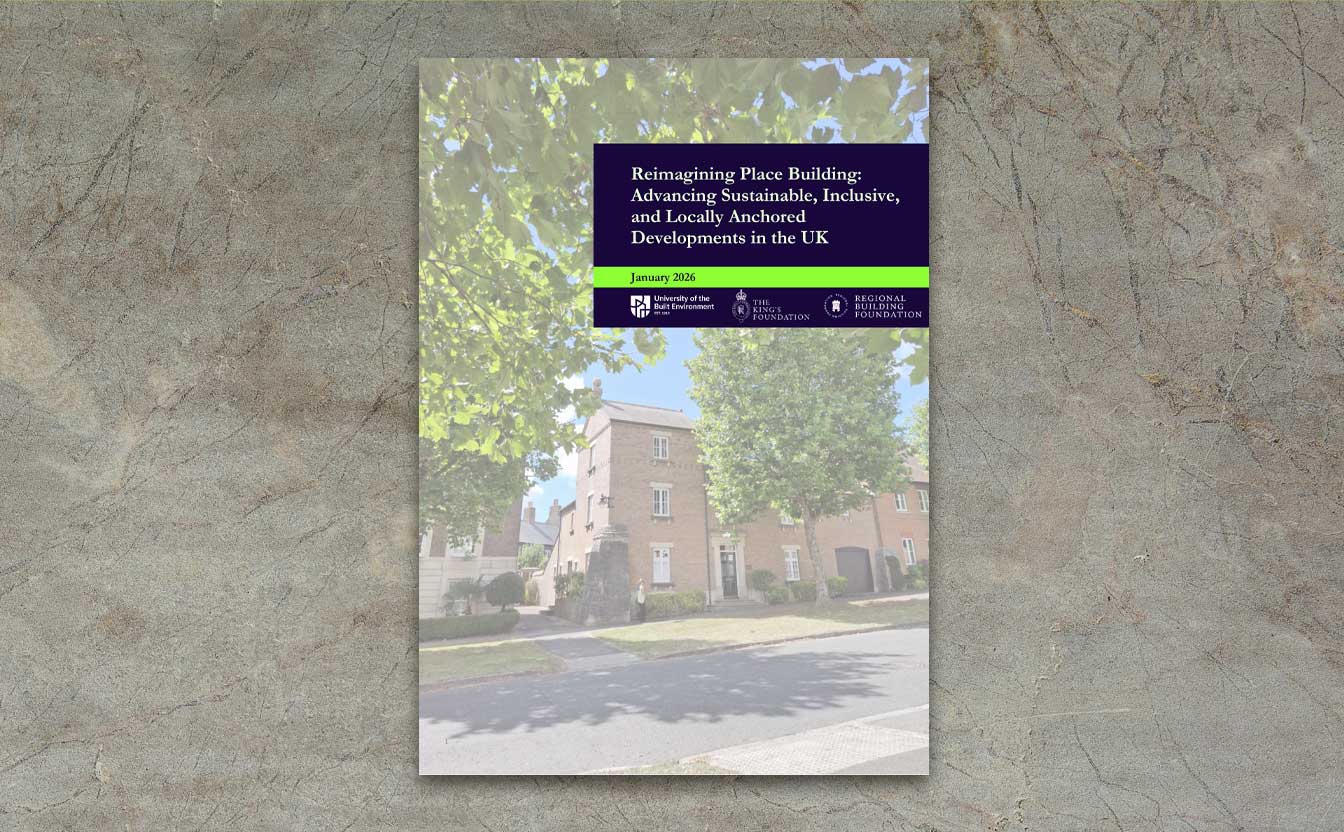
Reimagining Place Building-Advancing Sustainable, Inclusive, and Locally Anchored Developments in the UK (2026)
The focus of this report is to critically examine the concept of place building and demonstrate how the Place Building System offers a practical, evidence-informed framework for guiding equitable and sustainable development. It highlights the value of a place-based approach as a robust response to the UK’s housing and spatial challenges, balancing social, economic, and environmental priorities.
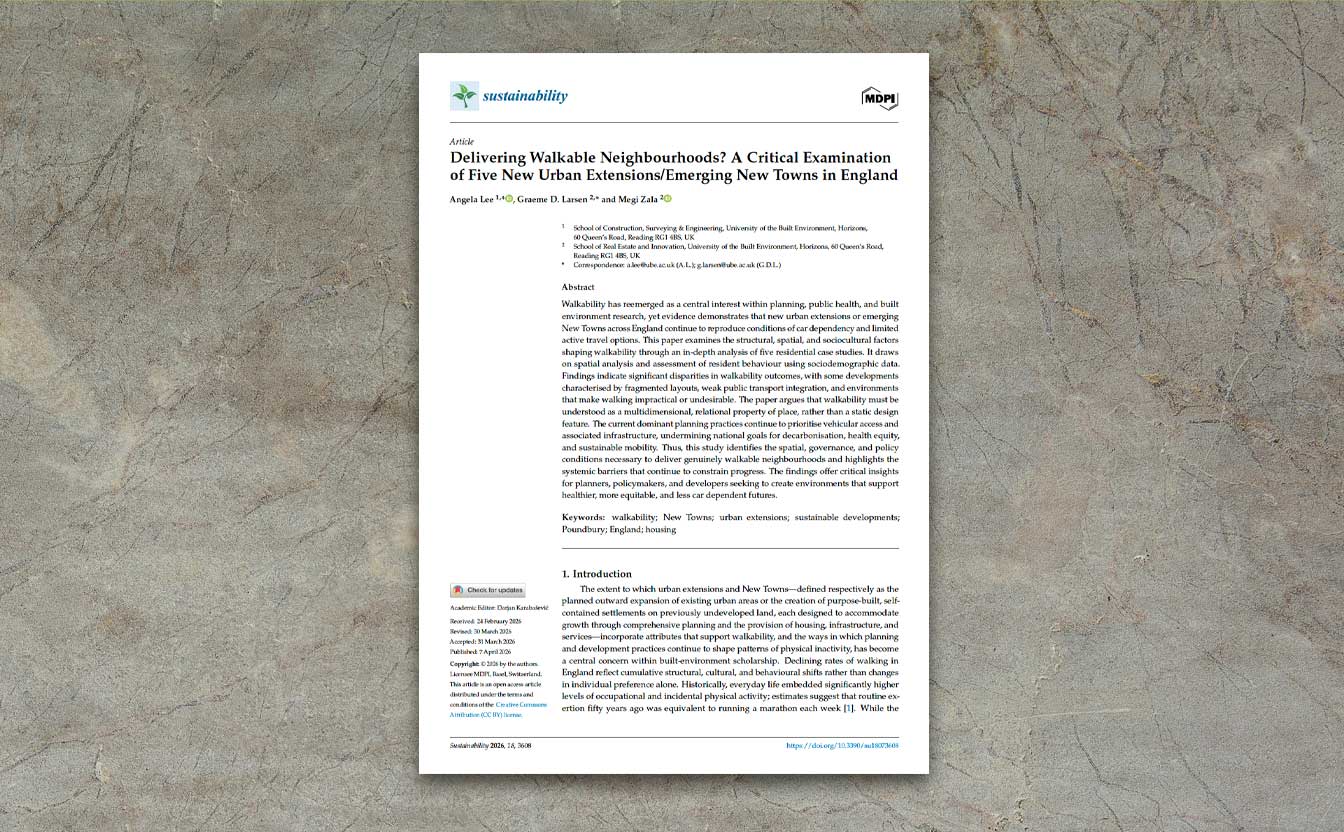
Delivering Walkable Neighbourhoods? A Critical Examination of Five New Urban Extensions/Emerging New Towns in England (2025)
This paper examines the structural, spatial, and sociocultural factors shaping walkability through an in-depth analysis of five residential case studies. It draws on spatial analysis and assessment of resident behaviour using sociodemographic data. Findings indicate significant disparities in walkability outcomes, with some developments characterised by fragmented layouts, weak public transport integration, and environments that make walking impractical or undesirable.
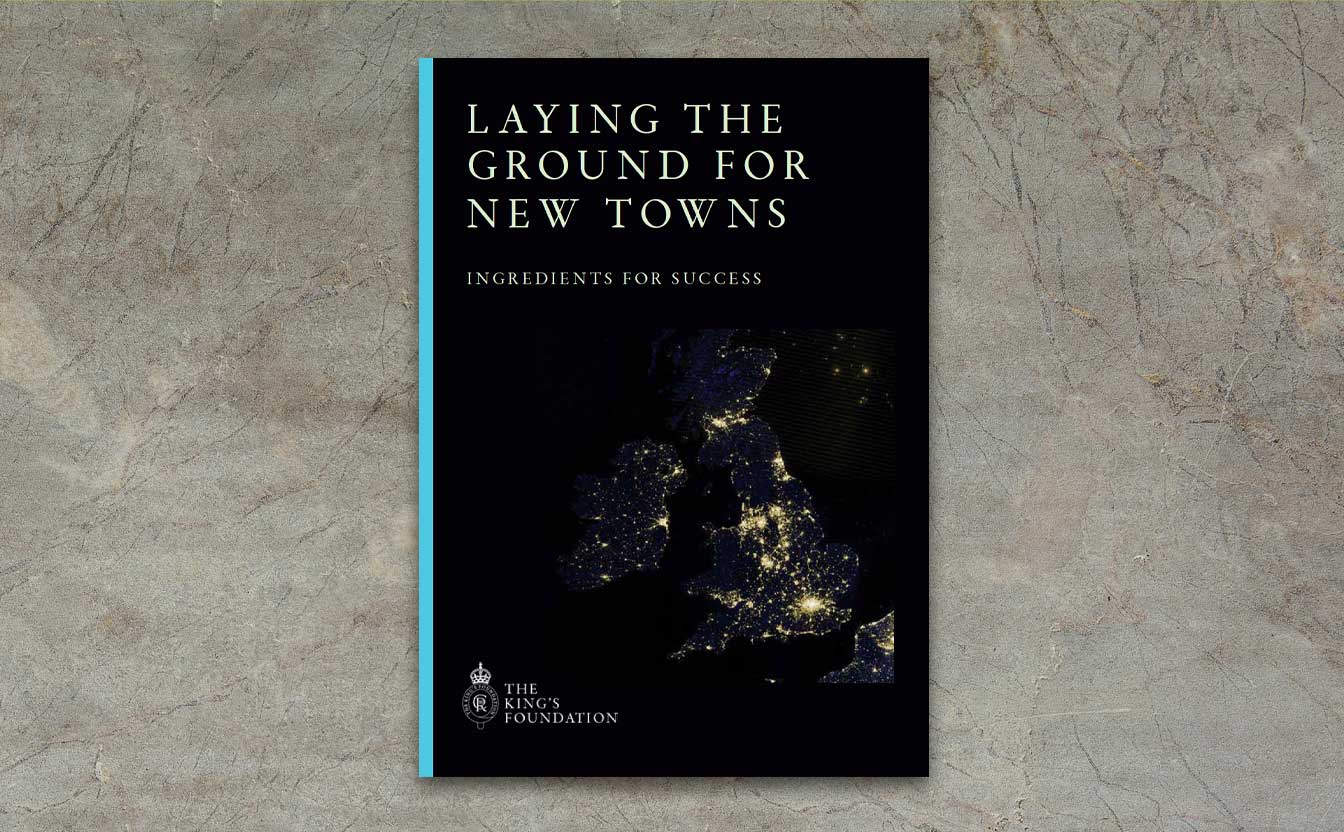
Laying the Ground for New Towns (2025)
In a harmonious system, the whole is greater than the sum of the parts, and in a town that means they contain all the functional elements needed for people to carry out their lives but are assembled to create public space which unites citizens as social beings. Towns and cities are therefore central to democracy where our collective life as citizens is better and more fulfilling than each individual life in isolation.
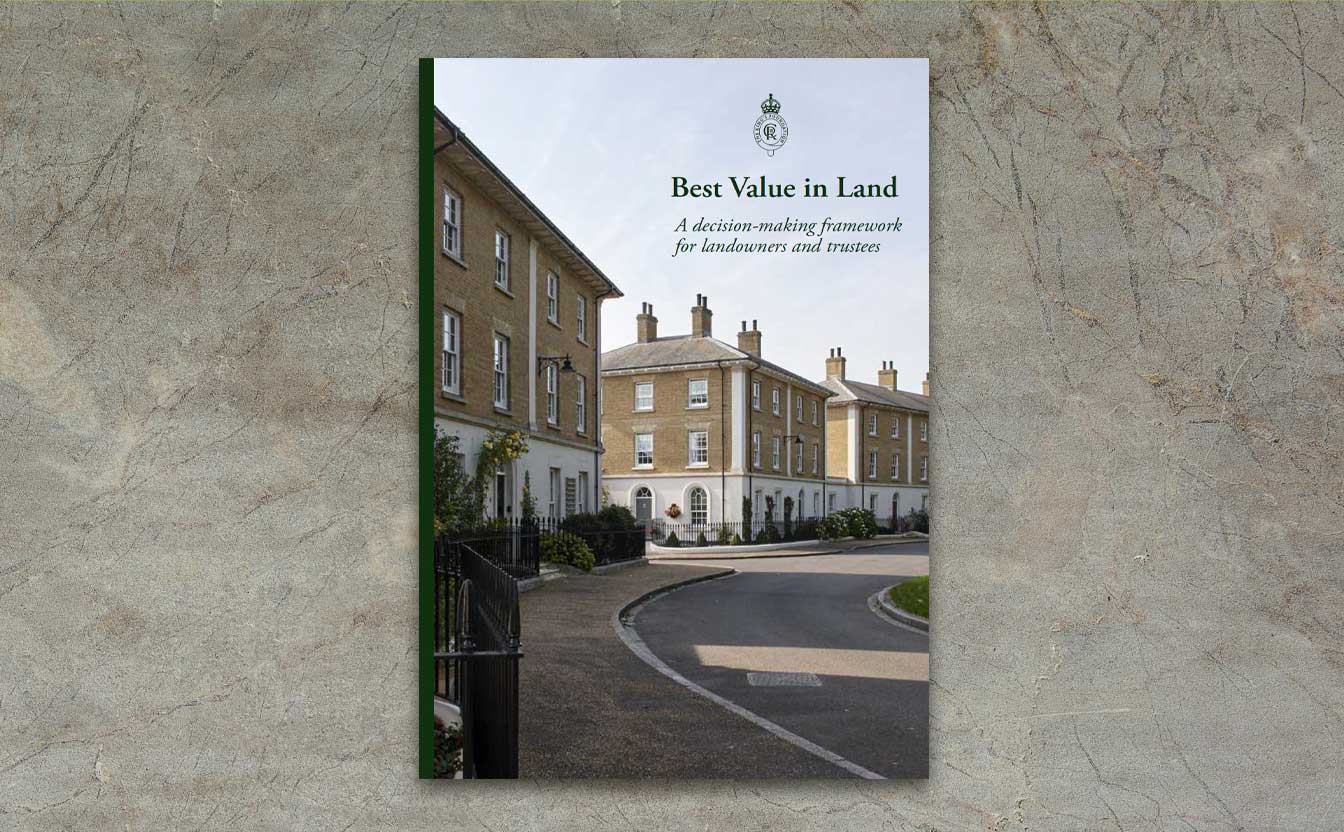
Best Value in Land: a decision-making framework (2025)
This report offers case studies and a decision-making framework to help landowners navigate these choices, weighing short-term financial gain against the long-term benefits of well-planned development. Focusing on urban development in the UK, it serves as a guide for landowners making strategic decisions about their land.
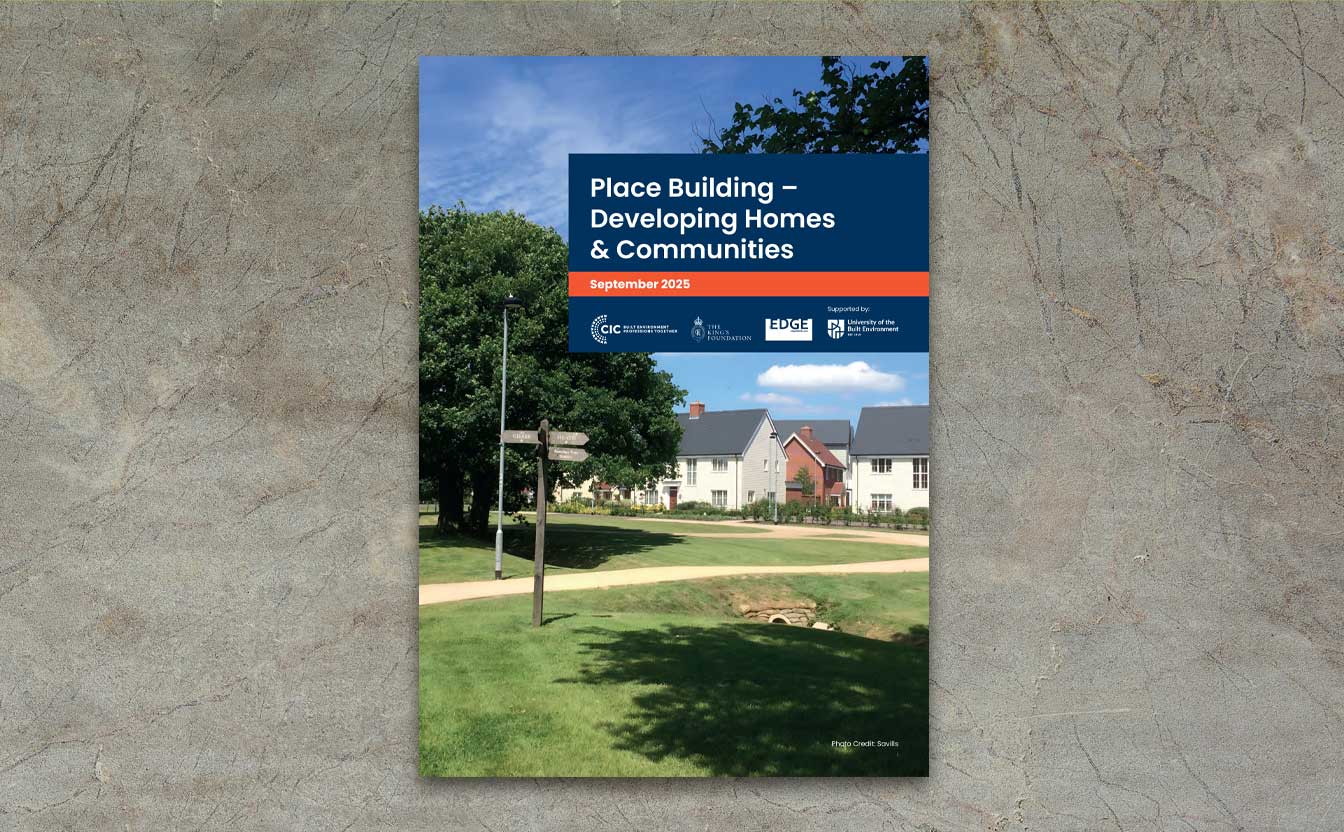
University of the Built Environment Inspire Report: Place Building – Developing Homes & Communities (2025)
The ‘Place Building – Developing Homes & Communities’ report advocates a shift from short-term housing targets to long-term placemaking, highlighting that, by aligning policy incentives with on-the-ground innovation and community insight, the built environment sector can transition from fragmented, short-term housing delivery towards a true place-building approach, leaving a legacy of lasting communities across the UK.
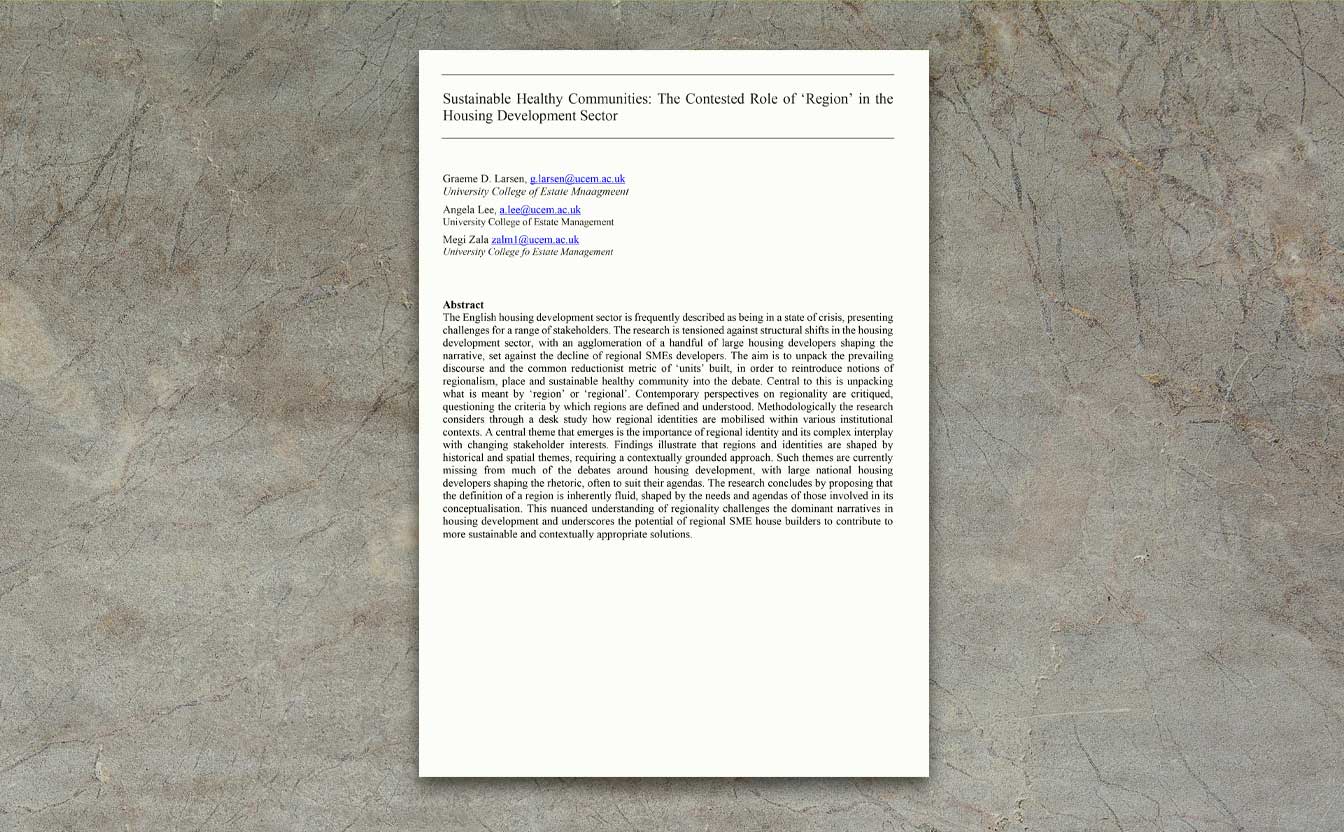
Sustainable healthy communities: the contested role of ‘region’ in the housing development sector (2025)
The English housing development sector is frequently described as being in a state of crisis, presenting challenges for a range of stakeholders. The research is tensioned against structural shifts in the housing development sector, with an agglomeration of a handful of large housing developers shaping the narrative, set against the decline of regional SMEs developers.
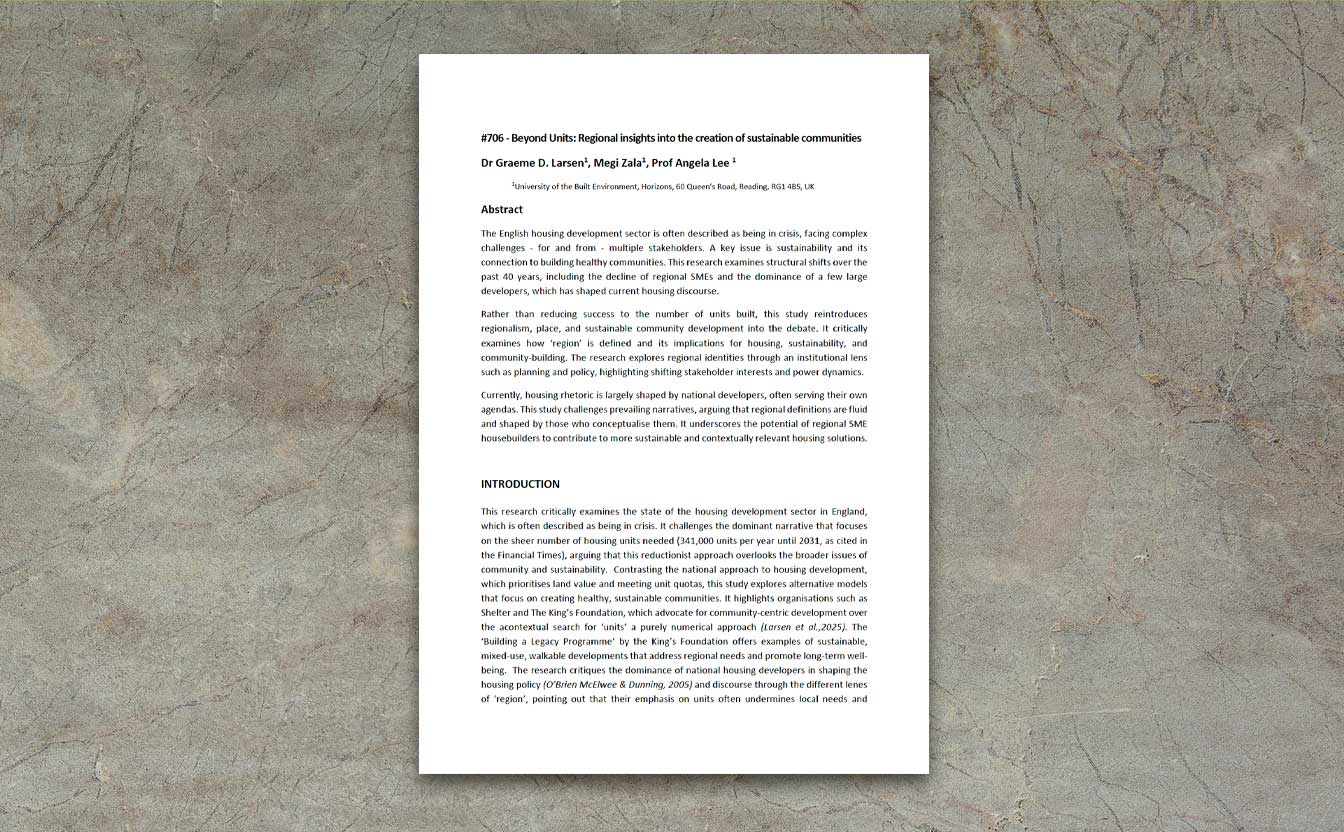
Beyond Units: Regional insights into the creation of sustainable communities (2025)
The English housing development sector is often described as being in crisis, facing complex challenges – for and from – multiple stakeholders. A key issue is sustainability and its connection to building healthy communities. This research examines structural shifts over the past 40 years, including the decline of regional SMEs and the dominance of a few large developers, which has shaped current housing discourse.
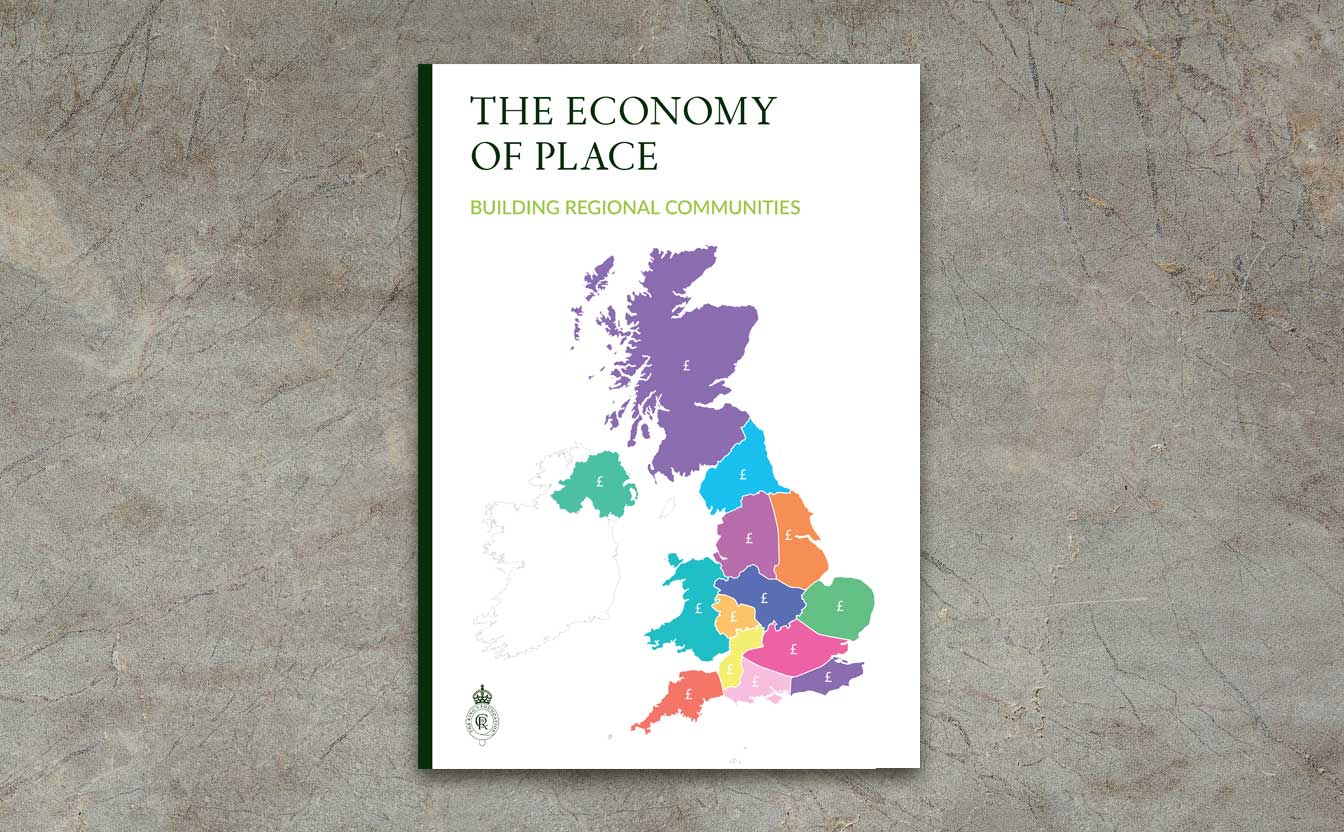
The Economy of Place (2024)
In this report, George Ferguson CBE, the first elected Mayor of Bristol and Past President of the Royal Institute of British Architects, asks questions about the importance of community and how we need to build in order to create them.
Planning with Nature (2023)
As recently as 15 years ago there was very little research into the benefits of nature on human health and wellbeing but recently there has been an overwhelming amount of research confirming what we intuitively feel, which is that access to water, plants, trees and animals is good for our physical and mental health.
Building Towards Net Zero Carbon Homes (2022)
Our 2022 report, Building Towards Net Zero Carbon Homes, highlights the urgent need for a coordinated, industry-wide effort to create more sustainable housing and communities.

Walkability, Accessibility and Health (2021)
‘We are designed for walking’… evidence shows that creating walkable, mixed-use neighbourhoods, that make us feel valued and safe, can improve our mental and physical health.
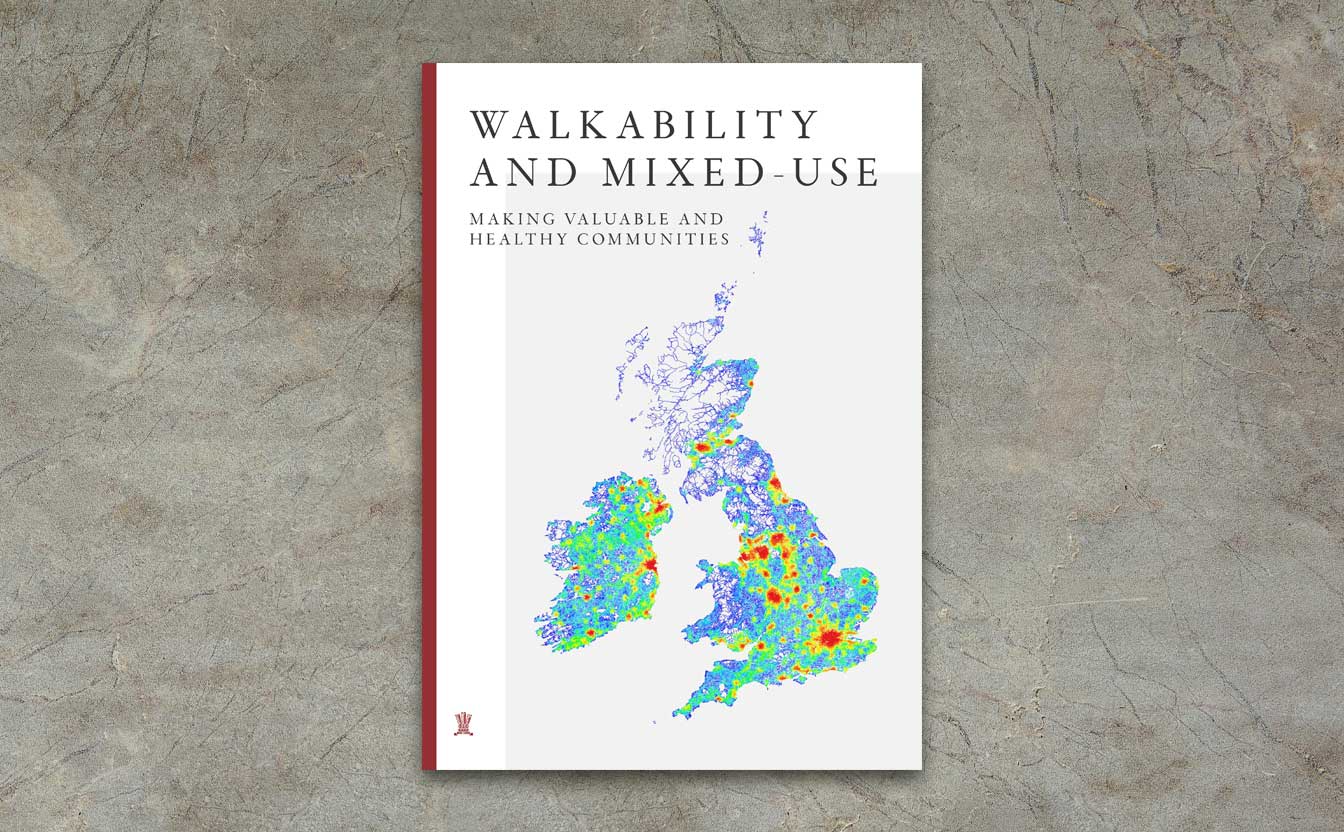
Walkability Report: Walkability and Mixed Use (2021)
How “walkable” is your neighbourhood? Can residents walk to work, their children’s school, and to the nearest shops and amenities? What does that mean for their quality of life and the time they spend in the car or exercising in the outdoors?
Housing Britain: A Call to Action (2019)
A 64-page publication which features a range of specially-commissioned articles articulated by a range of industry pioneers and thought-leaders addressing issues around housing in the UK.
Building a Legacy: The Value of Community (2019)
A joint report with the University College of Estate Management which reveals a direct link between housing type and social benefits.
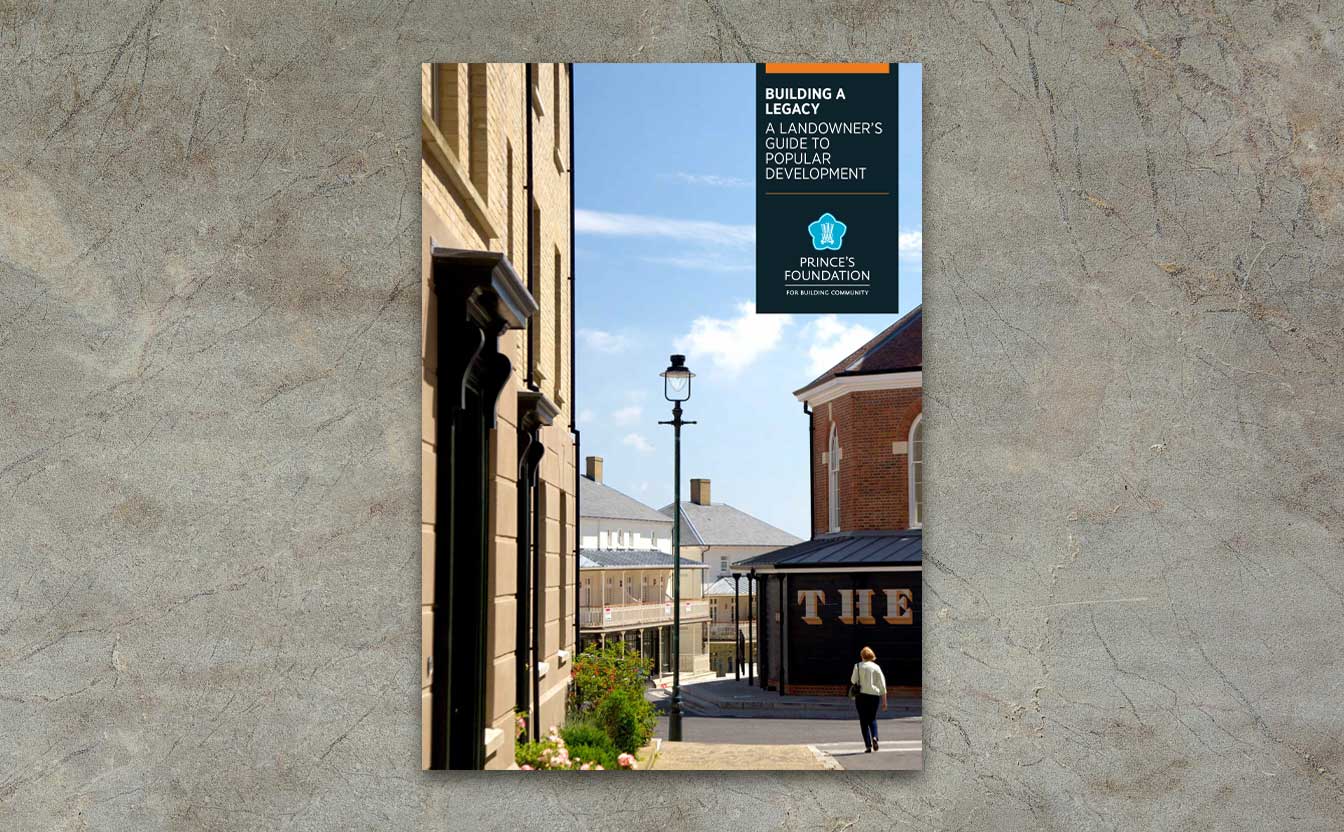
Building a Legacy: A Landowner’s Guide to Popular Development (2016)
With a housing affordability crisis in the UK and pressure to build up to 300,000 homes a year, there is a real risk that the built legacy of this generation will be a country littered with soulless housing estates.